Botolo la Mbewu: Chifukwa Chake Mbatata Zatsopano Zikupezeka Pambuyo Potulutsa Mitundu Yambiri
Njira zazikulu
- 10+ years of breeding before a variety even reaches release
- 4 stages separate starting material from certified seed
- 3 rapid multiplication routes could shorten that chain
- 1 route avoids tubers altogether: hybrid true potato seed
Chifukwa chake ndizofunika
- Kwa alimi
- If credit is the reason you recycle seed, price the yield you lose against the certified lot rather than against last year’s outlay - the article names affordability, not availability, as what keeps degenerated material in the ground.
- Za mapurosesa
- Send demand signals earlier than the contracting season: the piece argues processors, breeders and regulators need predictable volumes years ahead, because the multiplication chain that supplies your raw material runs on that horizon, not on annual orders.
- Kwa ogulitsa
- If you multiply seed, treat rapid methods as a cost question, not a novelty: aeroponics, sand hydroponics and apical cuttings are presented as ways to cut early-generation cost, and cost is what decides whether growers buy certified material.
- Kwa osunga ndalama
- Judge seed ventures on certified tonnes reaching farmers at a price they pay, not on plantlets produced, varieties registered or laboratories opened - the article states plainly that those are the wrong measures of success.
Chidule cha masekondi 60
Breeders keep releasing potato varieties with better disease resistance, climate resilience, storability and market quality, but the constraint on innovation sits after release: multiplying enough healthy planting material and getting it to growers at a price they can pay. Potatoes are propagated vegetatively through bulky, perishable tubers that carry viruses, bacteria, fungi and nematodes forward, so a variety that took over a decade of selection achieves little until clean material reaches farmers. Starting material must pass tissue culture, minitubers, early-generation field seed and foundation classes before certified seed exists - years of work at each step. Aeroponics, sand hydroponics and apical cuttings can speed the early generations; decentralised multiplication shortens the distance but complicates inspection; hybrid true seed skips tuber-borne disease but demands new agronomy. Affordability matters as much as supply: without credit, recycling declining seed is rational.
Potato breeders continue to deliver varieties with improved disease resistance, climate resilience, storability and market quality, yet the real constraint on innovation begins after a variety is released: multiplying enough healthy planting material and delivering it to growers at an affordable price. Unlike cereals, maize or oilseeds, conventional potatoes are propagated vegetatively through bulky, perishable and costly tubers that can carry viruses, bacteria, fungi and nematodes from one generation to the next. Even a variety that has survived more than a decade of crossing, selection, disease screening and field trials accomplishes very little commercially until sufficient quantities of healthy planting material reach farmers. The gap between sophisticated seed systems in Europe and North America and the informal, often recycled planting material used in many emerging production regions helps explain the enormous yield disparities across the global potato industry. Variety release is therefore the beginning, not the end: a small quantity of pathogen-tested starting material must pass through tissue culture, minitubers, early-generation field seed and foundation classes before certified commercial seed becomes available—a process that takes years, land, infrastructure and technical competence.
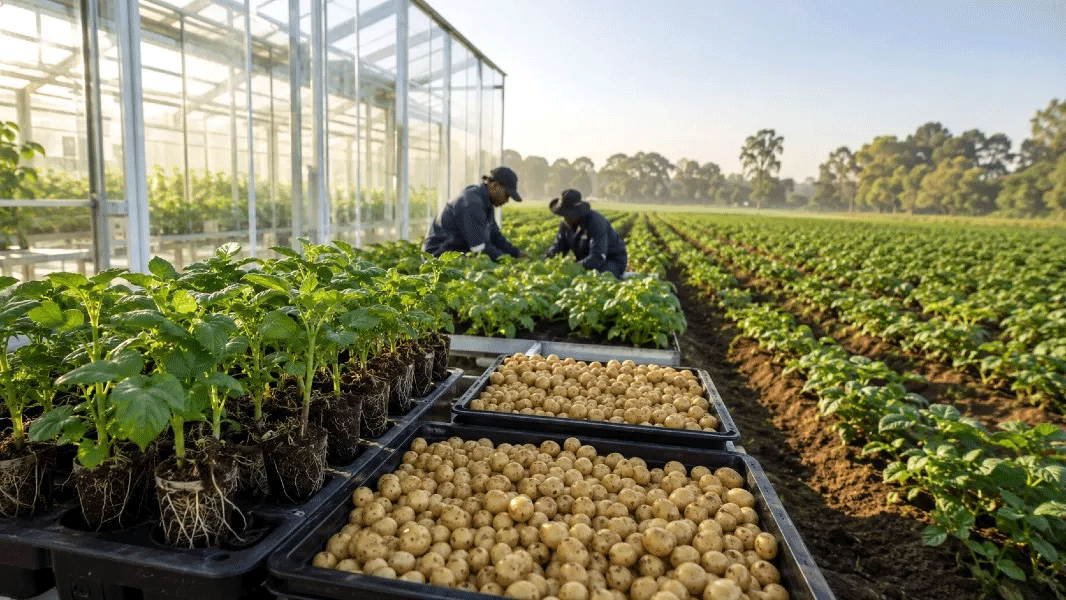
Several developments are reshaping how that bottleneck might be addressed. Rapid multiplication technologies such as aeroponics, sand hydroponics and rooted apical cuttings can accelerate early-generation seed production and reduce costs, while decentralised multiplication brings seed closer to farming communities—though it complicates quality control and requires training, inspection and traceability. Hybrid true potato seed offers potentially disruptive logistical advantages, since botanical seed is light, compact and largely free of tuber-borne disease, but it demands new agronomic systems and consistent processing performance. Meanwhile, seed affordability remains as important as availability: conventional seed tubers represent a large share of establishment costs, and growers without affordable credit may rationally recycle declining seed. Processors, breeders and regulators all have a stake in earlier coordination, predictable demand signals and multiplication traits built into breeding targets. Ultimately, no single technology will solve the global seed problem; success must be measured not in plantlets produced, varieties registered or laboratories opened, but in healthy commercial hectares—reliable chains that carry clean starting material all the way to the grower’s field.
Chidule cha Mbatata Padziko Lonse
Nkhani zisanu zapamwamba, mitengo, machenjezo a matenda ndi zochitika. M'mawa wa pakati pa sabata, palibe malonda.
Chotsatira
The article concludes that no single technology solves the problem and that success should be measured by material reaching farmers. It gives no timeline and names no programme or region where the approach is being tried.
Zolumikizidwa mu nkhaniyi
Nkhani zogwirizana
Mitundu ya Mbatata Yoberekedwa ku Norway: Kuyambira ku Malo Akale Okhala ndi Zipatso Mpaka Kulima Kwamakono
Kubereketsa Mbatata za ku Finland: Cholowa cha Pito, Kulta, ndi Mitundu Ina Yodziwika