Australia: Potato Output Reaches 1.53 Million Tonnes as Yields Climb to 40.8 t/ha

Njira zazikulu
- 1.53 Mt of potatoes produced in Australia in 2024, FAOSTAT
- 40.8 t/ha average yield, up from 28.5 t/ha back in 2000
- 61% of the crop grown in Tasmania and South Australia
- 40,000 t of potatoes exported, mainly to Korea, Philippines
Chifukwa chake ndizofunika
- Kwa alimi
- Benchmark against the 40.8 t/ha national average; in contract regions, negotiate terms with yield and quality data in hand.
- Za mapurosesa
- Diversify sourcing beyond Tasmania and South Australia, which together grow about 61% of the national crop.
- Kwa amalonda
- Develop Asian export lanes; about 40,000 t already go to South Korea and the Philippines each year.
- Kwa ogulitsa
- Sell efficiency, not volume: yields are near European levels and total output is stable around 1.4-1.5 Mt.
Chidule cha masekondi 60
Australian potato production is compact, productive and concentrated. The FAO series shows roughly 1.5 million tonnes in 2024, up by 28% since 2000, with average yields rising from 28.5 to nearly 41 tonnes per hectare, close to French and Dutch levels, though behind New Zealand and the United States. The national horticulture handbook confirms the scale and shows where the crop sits: Tasmania and South Australia together account for about three fifths of the total. The farm-gate value crossed A$1 billion for the first time in 2022 to 2023 after a 24% jump, and more than 40,000 tonnes went abroad, mostly to South Korea and the Philippines. Growers depend on a few big processors, so contract terms matter as much as weather. Caveat: state data are from the 2022 to 2023 handbook as reported by ABC News, and the regional share is derived from those numbers.
Australia produced 1.53 million tonnes of potatoes in 2024, according to FAOSTAT data published by Our World in Data. That is 28% more than the 1.20 million tonnes of 2000. The average yield rose from 28.5 t/ha to 40.8 t/ha over the same period.
Growth was not linear. Output fell to 1.08 million tonnes in 2020, then jumped to 1.46 million tonnes in 2021. It stayed near that level in 2022 and 2023.
Two states grow most of the crop
The Australian Horticulture Statistics Handbook 2022/23 gives the state picture, as reported by ABC News. The industry produces about 1.4 million tonnes per year. Tasmania grew 458,000 tonnes and South Australia 433,000 tonnes. Victoria followed with 263,000 tonnes, then New South Wales with 158,000 tonnes. Queensland produced 80,000 tonnes and Western Australia 68,000 tonnes.
Masiku a sabata. Tulutsani kulembetsa mutangodina kamodzi.
Tasmania and South Australia together supplied about 61% of the state total. The report names three companies as major investors in industry infrastructure: McCain, PepsiCo and Simplot.
Value above A$1 billion
The value of production passed A$1 billion for the first time in 2022/23. It increased by 24% in one year, according to the handbook data. Australia also exported more than 40,000 tonnes of potatoes that year. The main markets were South Korea and the Philippines.
Close to European yields
A yield of 40.8 t/ha puts Australia close to leading European producers. FAOSTAT shows 42.4 t/ha in France and 41.7 t/ha in the Netherlands for 2024. The United States reached 50.9 t/ha and New Zealand 51.3 t/ha. Australian yields in 2023 were 40.6 t/ha, so the level now looks stable.
Chifukwa chake ndizofunika
Australia has a small crop by world standards but high productivity. Production is concentrated: two states grow about 61% of the crop. Weather or contract changes in these states therefore move the national total.
A few large processors shape demand for contracted crops. Exports to Asia remain small, at about 3% of output, but give growers an extra outlet. For suppliers, the market is mature; gains will come from efficiency and quality rather than volume.
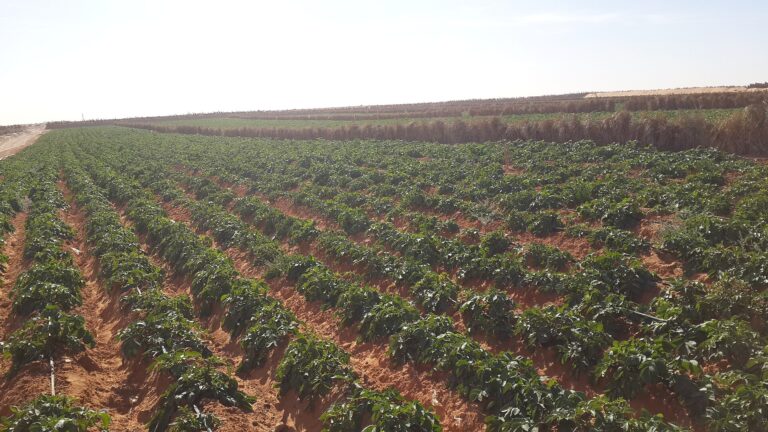
Photo: Harvesting potatoes near Crookwell, New South Wales, Australia (illustrative). Gregory Heath, CSIRO / Wikimedia Commons, CC NDI 3.0
Chidule cha Mbatata Padziko Lonse
Nkhani zisanu zapamwamba, mitengo, machenjezo a matenda ndi zochitika. M'mawa wa pakati pa sabata, palibe malonda.
Chotsatira
The texts give no forecast. New handbook editions will show whether production value holds above A$1 billion.
magwero
- ABC News (Australian Horticulture Statistics Handbook 2022/23), 18.02.2024 — https://www.abc.net.au/news/2024-02-18/potato-industry-now-worth-over-one-billion-dollars/103461744
- FAOSTAT kudzera mu Our World mu Data, Kupanga mbatata — https://ourworldindata.org/grapher/potato-production
- FAOSTAT kudzera mu Our World in Data, Zokolola za Mbatata — https://ourworldindata.org/grapher/potato-yields
Zolumikizidwa mu nkhaniyi
- Country
- Australia
- Companies
- McCain; PepsiCo; Simplot
- Zigawo
- AgronomyNkhani- HUASHIL
Nkhani zogwirizana

Peru: Kuchuluka kwa Mbatata Kuwirikiza kawiri kufika pa matani 6.58 miliyoni kuyambira 2000 pamene zokolola zikufikira 19.5 t/ha
Bolivia: Kukolola Mbatata Kufika Matani 1.38 Miliyoni Koma Kukolola Kuli Pafupi ndi 6.5 t/ha