Argentina: Kuchuluka kwa Mbatata Kutsika ndi Pafupifupi 70% Kuyambira mu 1961 Pomwe Zokolola Zakwera kufika pa 35.8 t/ha

Njira zazikulu
- Mu 1961, zokolola zinali 2.07 Mt pa hekitala imodzi ndipo zinali 10.2 t.
- 2024 output reached 2.11 Mt at a yield of 35.8 t per ha
- 55% of the national potato area lies in Buenos Aires
- 33,722 ha planted in the southeast, 12% below last year
Chifukwa chake ndizofunika
- Kwa alimi
- Dongosolo la malo motsutsana ndi kuchuluka kwa mapangano ndi mitengo yeniyeni; kuchepetsa kum'mwera chakum'mawa kukuwonetsa kuti kukulirakulira pambuyo pa kugwa kwa mitengo kumawonjezera kutayika
- Za mapurosesa
- Yang'anani chivundikiro cha zinthu zopangira nyengo ya 2026/27; dera laling'ono la kum'mwera chakum'mawa ndi 12% lingathe kulimbitsa mbatata zogulitsidwa kunja kwa mapangano
- Kwa amalonda
- Tsatirani kufunikira kwa Brazil mosamala; bungwe la alimi likunena kuti malonda kwa wogula wamkulu wogulitsa kunja atsika ndi theka
- Kwa ogulitsa
- Plan seed and input sales for a smaller but higher-yield planted area; seed covers about 3,330 ha in the southeast
Chidule cha masekondi 60
Argentina now harvests about the same potato tonnage as six decades ago, but on roughly 70% less land by our calculation. FAOSTAT figures show 2.07 million tonnes in 1961 and 2.11 million tonnes in 2024, while average yield climbed from about 10 to almost 36 tonnes per hectare. Production is concentrated: Buenos Aires province accounts for more than half of the area, with Córdoba and San Luis adding close to 29%. The southeast of Buenos Aires is the swing zone. After a loss-making 2025 with surplus supply and falling prices, satellite mapping by INTA found that planting there dropped to 33,722 hectares, with Balcarce down 16% and only Necochea expanding. For processors and traders this means tighter supply outside contracts and a market that growers are trying to rebalance by planting less. The main caveat is data: FAOSTAT and industry estimates of national output differ by up to 0.8 million tonnes.
Argentina produced 2.07 million tonnes of potatoes in 1961 at a yield of 10.2 tonnes per hectare, according to FAOSTAT data published by Our World in Data. In 2024 the same data show 2.11 million tonnes at 35.8 tonnes per hectare.
By our calculation, this means the harvested area fell from about 203,000 hectares to about 59,000 hectares. That is a drop of roughly 70%. Output stayed almost flat because yields rose about 3.5 times. The FAOSTAT series peaked at 3.0 million tonnes in 2021.
Where potatoes are grown
Buenos Aires province holds 55% of the national potato area, according to figures cited by the regional newspaper La Nueva in April 2026. Córdoba and San Luis hold 28.8%, Tucumán 7.7% and Mendoza 5.3%. Jujuy and Salta hold 1.7% and Santa Fe 1.2%. The same report puts national output at about 2.9 million tonnes, with average yields of 30 to 35 tonnes per hectare.
Masiku a sabata. Tulutsani kulembetsa mutangodina kamodzi.
The southeast of Buenos Aires province is the core zone. Balcarce, General Alvarado and Tandil are among its main districts.
A smaller crop after a bad year
The research institute INTA measures the southeast area every year with satellite images. Its latest survey was presented at the National Potato Festival in March 2026. It shows 33,722 hectares planted, down 12% from 38,177 hectares a year earlier.
Most districts cut area. The survey shows these changes:
- General Pueyrredón: minus 19%
- General Alvarado: minus 17%
- Balcarce: minus 16%, from 8,728 to 7,389 hectares
- Tandil: minus 14%
- Benito Juárez: minus 13%
- Necochea: plus 32%
Seed potatoes covered 3,329.6 hectares in the southeast, according to the survey. Growers said 2025 brought losses, oversupply and a sharp fall in prices. The national growers federation FENAPP said the sector must plant better, not more. The federation also reported that sales to Brazil, the main export buyer, fell by 50%.
Chifukwa chake ndizofunika
Argentina has become a high-yield, concentrated potato producer. A small change in southeast Buenos Aires area now moves national supply and prices. The 12% cut is a deliberate market correction by growers, not only a weather effect.
For processors, a smaller fresh crop can tighten raw material outside contracts. For exporters, the weak Brazilian demand remains the main risk. Input costs are also rising, which limits any quick return of area.
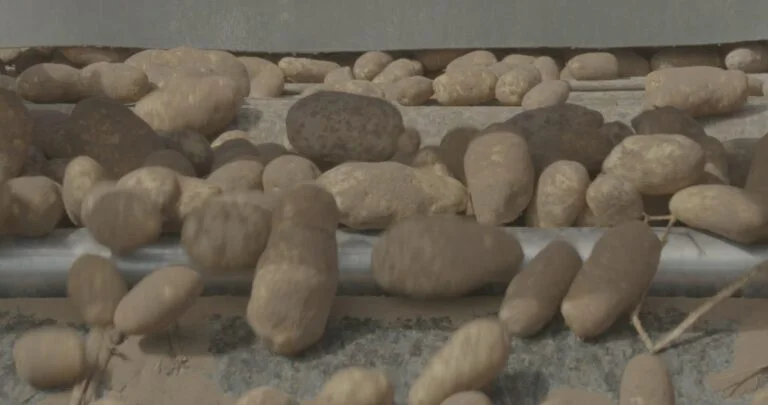
Photo: A potato crop in the Mantaro Valley, Peru (not Argentina) (illustrative). AsiriMH / Wikimedia Commons, CC NDI-SA 4.0
Chidule cha Mbatata Padziko Lonse
Nkhani zisanu zapamwamba, mitengo, machenjezo a matenda ndi zochitika. M'mawa wa pakati pa sabata, palibe malonda.
Chotsatira
Growers expect lower yields for intermediate and late potatoes after wet planting conditions. The sector aims to recover prices through smaller plantings, while higher fuel and fertiliser costs limit expansion.
magwero
- Dziko Lathu mu Deta, Kupanga mbatata / Zokolola za mbatata (deta ya FAOSAT, yasinthidwa pa 25.02.2026) — https://ourworldindata.org/grapher/potato-production ; https://ourworldindata.org/grapher/potato-yields
- La Nueva (Papa: el sudeste bonaerense avanza hacia la lógica de producir menos para ganar más), 21.04.2026 — http://www.lanueva.com/nota/2026-4-21-5-0-0-papa-el-sudeste-bonaerense-avanza-hacia-la-logica-de-producir-menos-para-ganar-mas
- Puntonueve (Cae la superficie sembrada de papa en Balcarce y el sudeste bonaerense), 23.03.2026 — https://puntonueve.com.ar/cae-la-superficie-sembrada-de-papa-en-balcarce-y-el-sudeste-bonaerense/
- El Atlántico (Papa: caída del 12% de la superficie de siembra), 21.04.2026 — https://diarioelatlantico.com.ar/2026/04/21/papa-caida-del-12-de-la-superficie-plantada/
Zolumikizidwa mu nkhaniyi
- Country
- Argentina
- Zamakono
- satellite crop area mapping
- Zigawo
- AmericaNkhani- HUASHIL
Nkhani zogwirizana

Chile: Kutumiza Mbatata Kunja Kwakwera ndi 47% Kufika mu Ogasiti, Mbewu za Mbatata Zikutumiza Motsogozedwa
USA: Okonza Ma processor Agwiritsa Ntchito Mbatata Zokwana 286 Miliyoni mu 2025, Zakwera ndi 5%